Regulatory Update: IMO’s Net Zero Framework and Refrigerant Implications
By Georg Fösel
Manager for Refrigeration Technology and Industry Affairs
At the recent extraordinary session of the Maritime Environment Protection Committee (MEPC), the International Maritime Organization (IMO) planed to advance its greenhouse gas (GHG) strategy with the formal adaption of the Net Zero Framework (NZF). Earlier this year, the NZF was incorporated into the MARPOL Convention as Chapter 5 of Annex VI and aimed at accelerating decarbonization across the shipping industry.
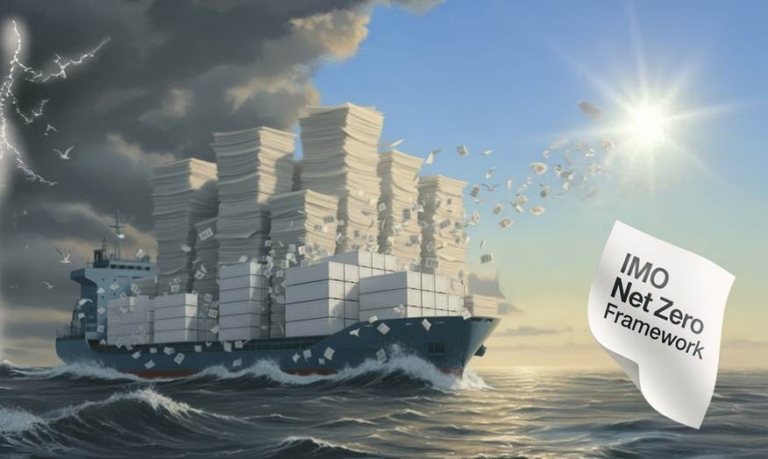
But despite this agreement, the NZF did not receive unilateral support by all member states – in particular a couple of technical concerns still need to be clarified:
• Governance and allocation of funds under the NZF
• An unclear regulatory pathway for LNG as a transitional fuel
• Incomplete Life Cycle Assessment (LCA) guidelines
• A lack of incentives for early adopters of low emission technologies
• Limited global production capacity for alternative low carbon fuels
Strong opposition from the current U.S. administration, particularly regarding GHG regulations and taxation, resulted in a compromise: The vote on the NZF is postponed for one year. The MEPC will reconvene in October 2026, and the earliest possible entry into force is now set for March 1, 2028.
What’s Next? Focus on Existing Tools and Reefer Operations
While the implementation of the NZF is delayed, the IMO continues to refine its guidelines. In the meantime, existing regulatory tools remain central to decarbonization efforts. The Carbon Intensity Indicator (CII) is the most prominent of these tools.
The Carbon Intensity Indicator (CII): What Reefer Operators Need to Know
The CII, part of MARPOL Annex VI, measures a ship’s carbon efficiency as CO₂ emissions per cargo carrying capacity and distance sailed. Each vessel receives an annual rating from A to E, where A is the best and E is the worst. Ships with lower ratings must carry out corrective actions to improve performance.
Reefer containers require continuous power for cooling, which can increase a vessel’s energy consumption. This effect is most noticeable on long voyages or in warm climates. Ships carrying large numbers of inefficient reefer containers may experience a negative impact on their CII rating, making smart reefer management important for compliance and competitiveness.
When actual consumption data is unavailable, the IMO uses a default energy consumption value of 2.75 kWh per reefer per hour in CII calculations. This highlights the value of accurate monitoring and the adoption of energy efficient technologies such as Star Cool 1.1, which can reduce energy use by up to 45%.
Looking Ahead
Although the delayed implementation is taking some momentum from the decarbonization initiatives, the overall direction remains unchanged. Energy efficiency and emissions reduction will continue to receive increased attention. Reefer operators should maintain awareness of regulatory developments, invest in efficient technologies, and prepare for stricter standards as the IMO’s decarbonization agenda progresses.